Why Solitaire Engagement Rings Are Still So Popular
A solitaire engagement ring may be defined by one principal diamond, but that certainly does not mean every solitaire looks the same.
Change the shape of the stone and the proportions alter immediately. Choose yellow gold rather than platinum and the overall appearance shifts again. Even the number and style of claws can change how much of the diamond you see.
That ability to make a seemingly simple design feel completely personal is one of the reasons solitaire engagement rings remain so popular.
What Makes a Solitaire Engagement Ring Different?
The centre diamond is the focus.
There is no halo surrounding it and no second or third principal stone competing for attention. As a result, the cut, proportions and setting of that diamond matter enormously.
For someone who wants their engagement ring to be defined by one stone, the solitaire remains difficult to beat.
Does Diamond Shape Matter?
Very much so.
A brilliant cut gives a balanced, symmetrical appearance, while an oval or marquise creates more length across the finger. Neither is better, but they can look remarkably different once tried on.
This is why we always recommend comparing more than one diamond shape in person, even if you arrive convinced you already know which one you prefer.
Can a Solitaire Have Diamonds on the Shoulders?
Yes.
The term solitaire refers to the principal centre stone, so the band itself does not necessarily need to be plain.
Adding smaller diamonds to the shoulders introduces more sparkle while still leaving one diamond as the clear focal point. It can be a useful middle ground for someone who loves the simplicity of a solitaire but wants a little more detail.
Four Solitaire Engagement Rings Worth Seeing in Person
An oval diamond immediately gives a solitaire a different proportion from the traditional brilliant cut.
Here, the elongated centre stone is paired with yellow gold, creating a warmer overall appearance while keeping the diamond firmly at the centre of the design.
We love this for someone who wants a recognisable solitaire without choosing the most expected version of one.
This is the solitaire stripped back to what matters most, one brilliant cut diamond and a setting designed to let it be seen.
There is a reason the brilliant cut remains such an important choice for engagement rings. Its balanced shape works beautifully in a simple setting and gives very little else the opportunity to distract from the stone.
For someone drawn to clean proportions and traditional diamond shapes, this is a very strong place to start.
This ring shows how much more detailed a solitaire can become without losing its identity.
The oval diamond remains the principal stone, while diamonds along the shoulders add further light around it.
We particularly like this option for someone who loves the elongated shape of an oval but wants a little more sparkle across the finger than a plain band would provide.
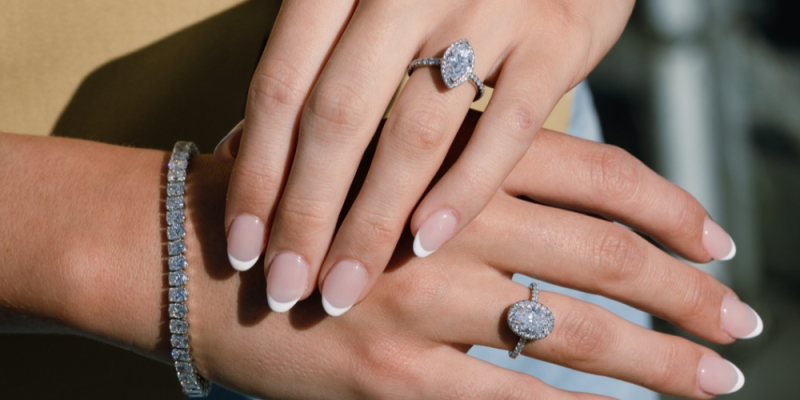
The marquise is the most dramatic shape in this selection and changes the look of a solitaire completely.
Its long, pointed outline creates a very different proportion on the hand and makes the centre diamond impossible to overlook.
This is one of those rings we would strongly recommend seeing in person. Photographs can show the shape, but they cannot quite show how much presence a marquise diamond can have once it is on the finger.
Take a closer look at the Certificated Marquise Diamond Solitaire Ring
Does a Solitaire Work with a Wedding Ring?
One of the practical advantages of many solitaire designs is that they can work beautifully alongside a wedding ring, although the height and shape of the setting will make a difference.
If you are already thinking ahead, try the engagement ring with a few different wedding band profiles before deciding. A small detail in the setting can affect how closely the two rings sit together.
Which Solitaire Engagement Ring Is Right for You?
The best way to decide is to stop looking at solitaires as one style.
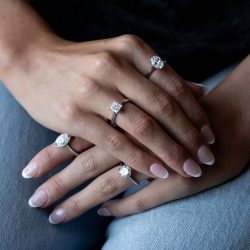
Compare brilliant, oval and marquise diamonds. Try yellow gold alongside platinum. Look at a plain band, then one with diamond shoulders, and see which combination feels most like you.
Hancocks Jewellers has been helping people choose engagement rings in Manchester since 1860, and we are very happy to take as much time as you need. You do not have to know the terminology or arrive with the perfect ring already in mind. We can show you the differences, answer the questions and help you narrow the choice down until the right ring becomes obvious.