Free Shipping
You’ve chosen the stone. Cut, carat and colour are all decided, and funnily enough, that was the easy part.
Gemstones you can get your head around. Metals are fairly straightforward.
But types of ring settings and mountings? That is often the part people think about last, despite it making a surprisingly big difference to how a ring looks, feels and wears every day.
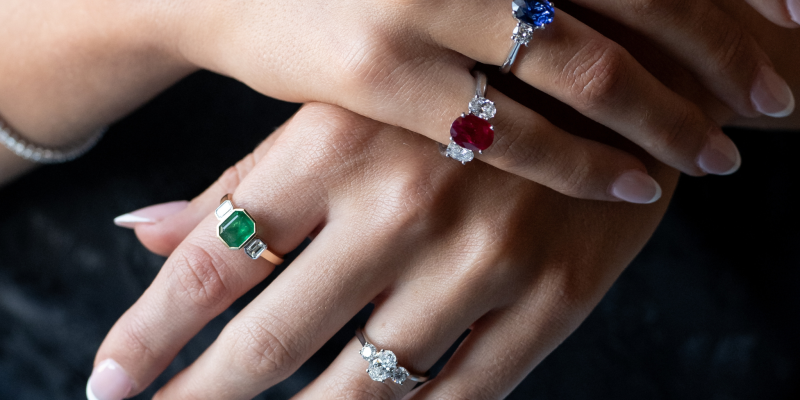
A claw setting can show more of the stone. A rub over setting gives more protection around its edge. A halo can give a centre stone greater presence, while pavé and channel settings introduce smaller stones across the ring itself.
So which is right for you?
Here is our guide to the most common ring settings, how they work and what you should consider before choosing one.
A claw setting uses four or six metal claws, occasionally eight, to secure a stone.
A bezel setting, also called a rub over or rubbed over setting, surrounds the edge of a gemstone with metal.
A halo setting places a circle of smaller gemstones around a larger centre stone.
A pavé setting sets small gemstones closely into the surface of the metal, creating an almost continuous area of sparkle.
A channel setting places gemstones closely together in a continual line between two secure strips of metal, with no individual claws between each stone.
There is one small technical distinction worth knowing too. When people talk about ring settings, they often use the term to describe both how the gemstones are physically secured and the overall style of the ring. A halo, for example, describes the arrangement of stones around a centre stone, but that centre stone might itself be held by claws or a rub over setting.
You certainly do not need to know every bit of jeweller’s terminology before buying a ring, but understanding the difference makes comparing rings much easier.
The tinny hooks of metal you see on top of a gemstone is not doing all the work.
In all settings, the stone sits in a cage of metal underneath called the underbezel. It supports the stone and adds structure to the setting, and can dictate the style of claws, beads or metal worked needed to secure it in position.
That is why workmanship matters every bit as much as the style of setting itself.
Two claw set rings can look similar from above, but the quality of the setting underneath is what really matters once you start wearing them.
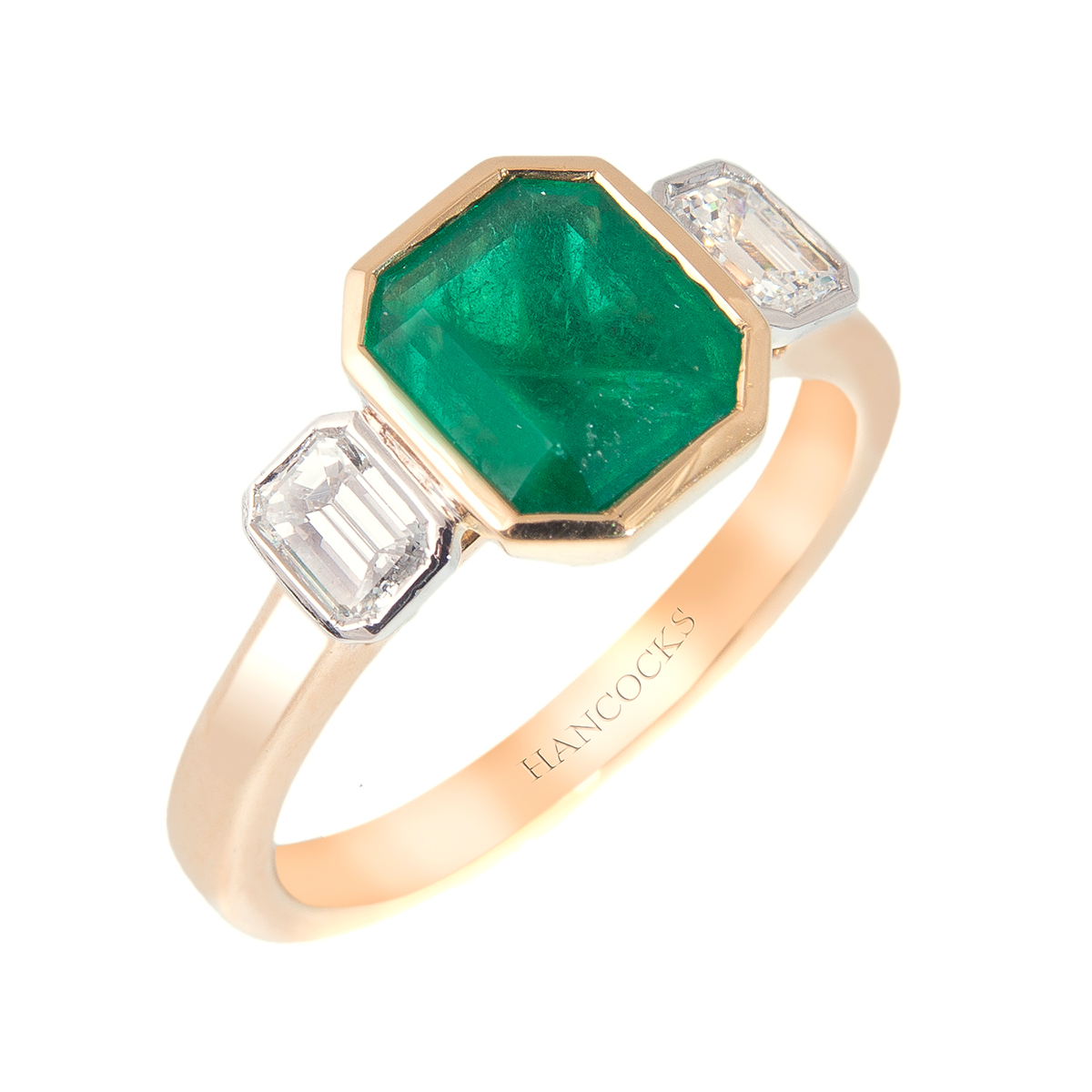
A bezel setting surrounds the gemstone with a continuous rim of metal.
At Hancocks Jewellers, you will also hear us describe this as a rub over or rubbed over setting. A collar of metal surrounds the stone and is carefully worked over its edge, while the gemstone sits on a seat cut inside the setting.
One of the main advantages is protection. The metal covers the girdle, the thin outer edge of a faceted gemstone, rather than leaving it exposed.
A full rub over mount surrounds the stone completely. A half or partial rub over covers only part of the stone, leaving other sections open.
It should not be confused with a tension setting, where pressure from the metal holds the stone between two opposing sides.
If you want a smoother, lower profile ring with fewer exposed areas to catch, a rub over setting can be a very good choice.
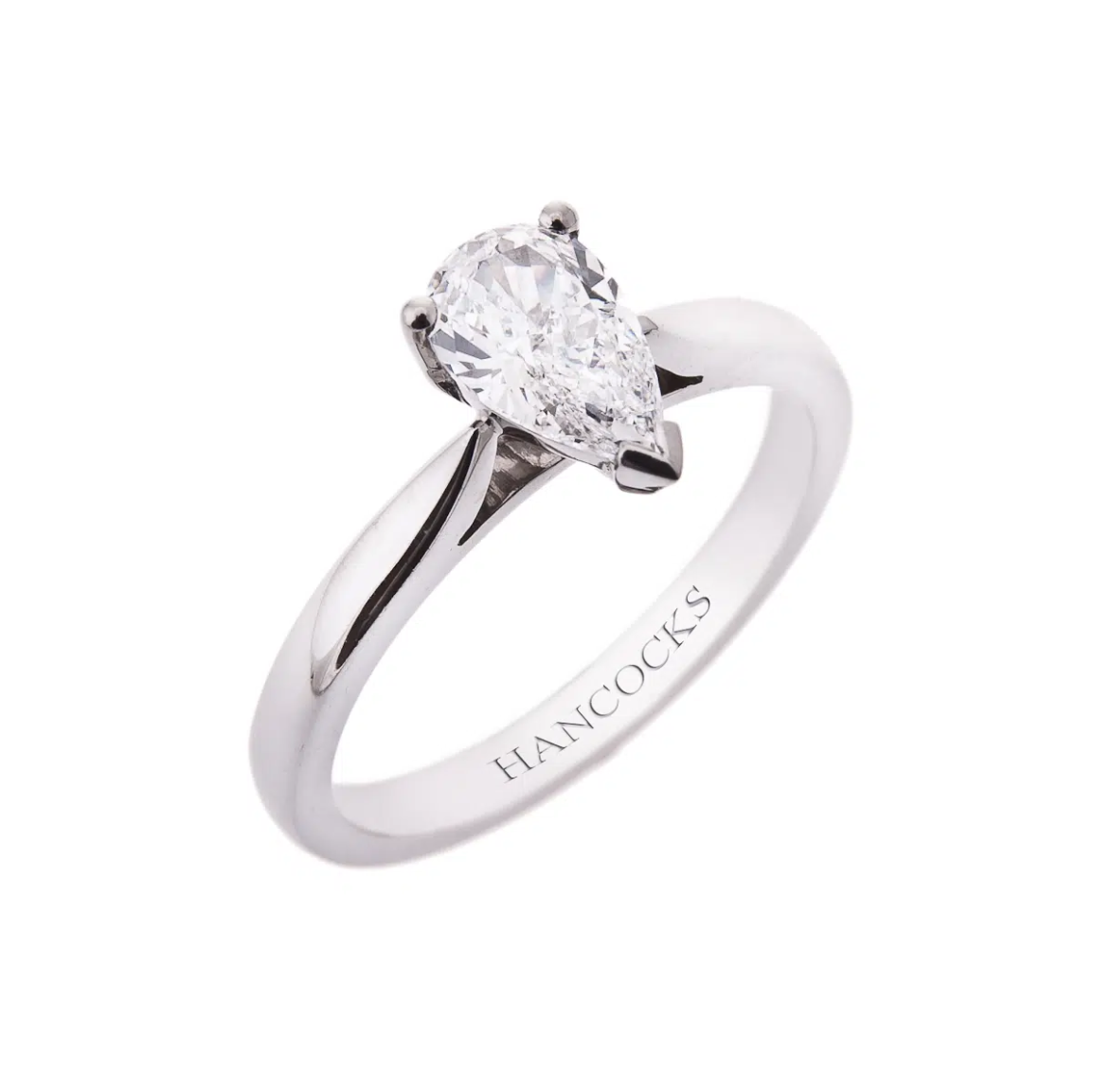
A claw setting uses small metal claws to secure the gemstone in position.
Four and six claw settings are the most common, although the exact number depends on the design, size and shape of the stone.
There are plenty of reasons someone might lean towards a claw setting.
If you want to see as much of the gemstone as possible, claws leave much of the girdle visible. They can also give the stone a beautifully open appearance from the side.
A claw setting can allow a gemstone to sit higher too, although not every claw set ring has a high profile. The height and construction of the setting are worth looking at separately, particularly if you wear gloves regularly or work with your hands.
Claws will also need checking over time. If one begins catching on clothing or feels rough, do not ignore it. That can be an early sign that it needs attention.
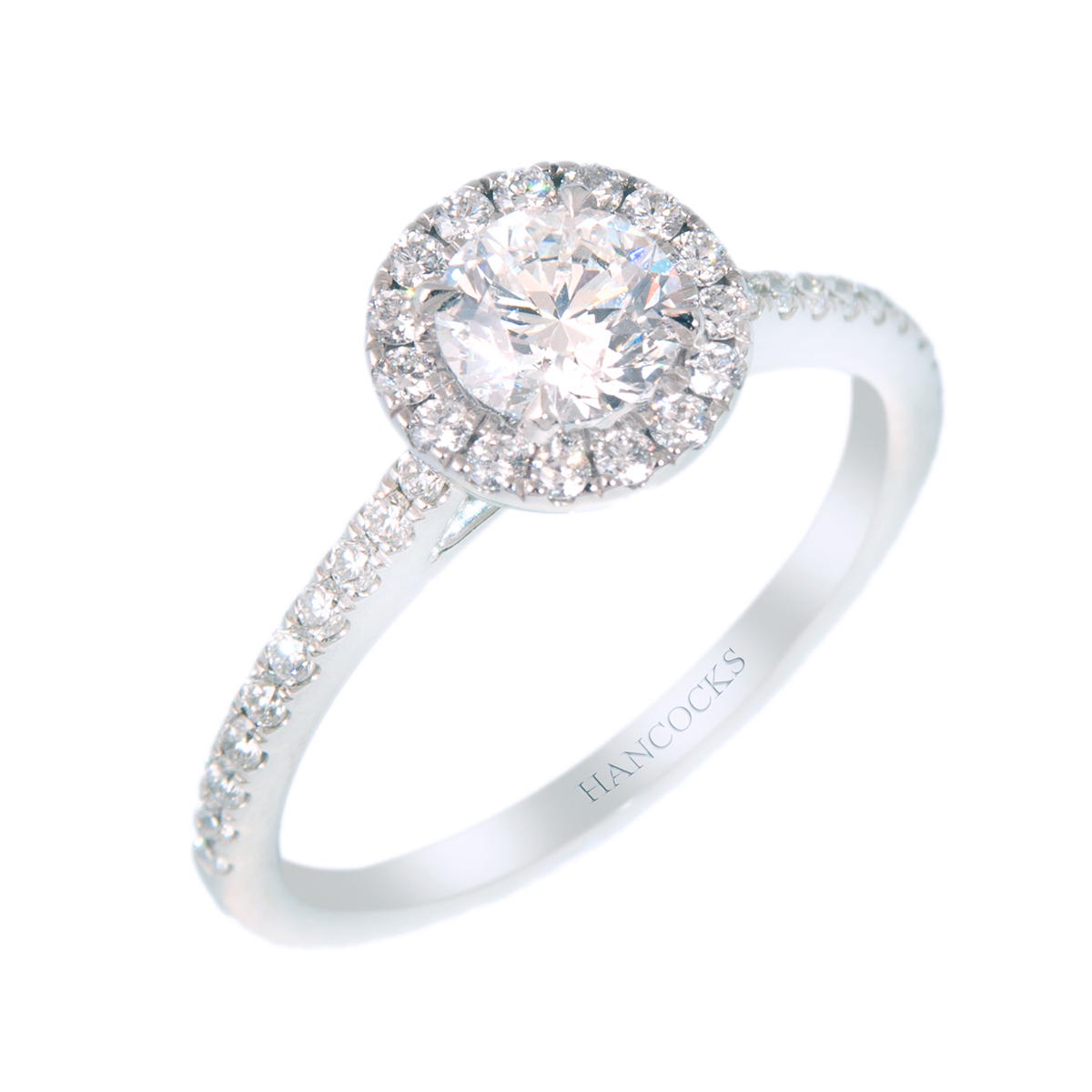
A halo setting places a ring of smaller gemstones closely around a larger centre stone.
Those smaller stones are often diamonds, adding extra sparkle around the centre and creating a much greater visual presence across the finger.
Technically, the halo describes the design around the centre stone rather than the method holding the centre stone itself. Look closely and you may find that the central diamond or gemstone is secured by claws or a rub over setting, with the halo sitting around it.
A halo can also make a centre stone appear larger because your eye reads the centre and surrounding diamonds together.
Coloured gemstones work particularly well in this style. A sapphire, ruby or emerald surrounded by white diamonds creates a striking contrast, with the colour of the centre stone becoming even more noticeable against the brightness of the halo
See our brilliant cut diamond cluster ring with halo setting.
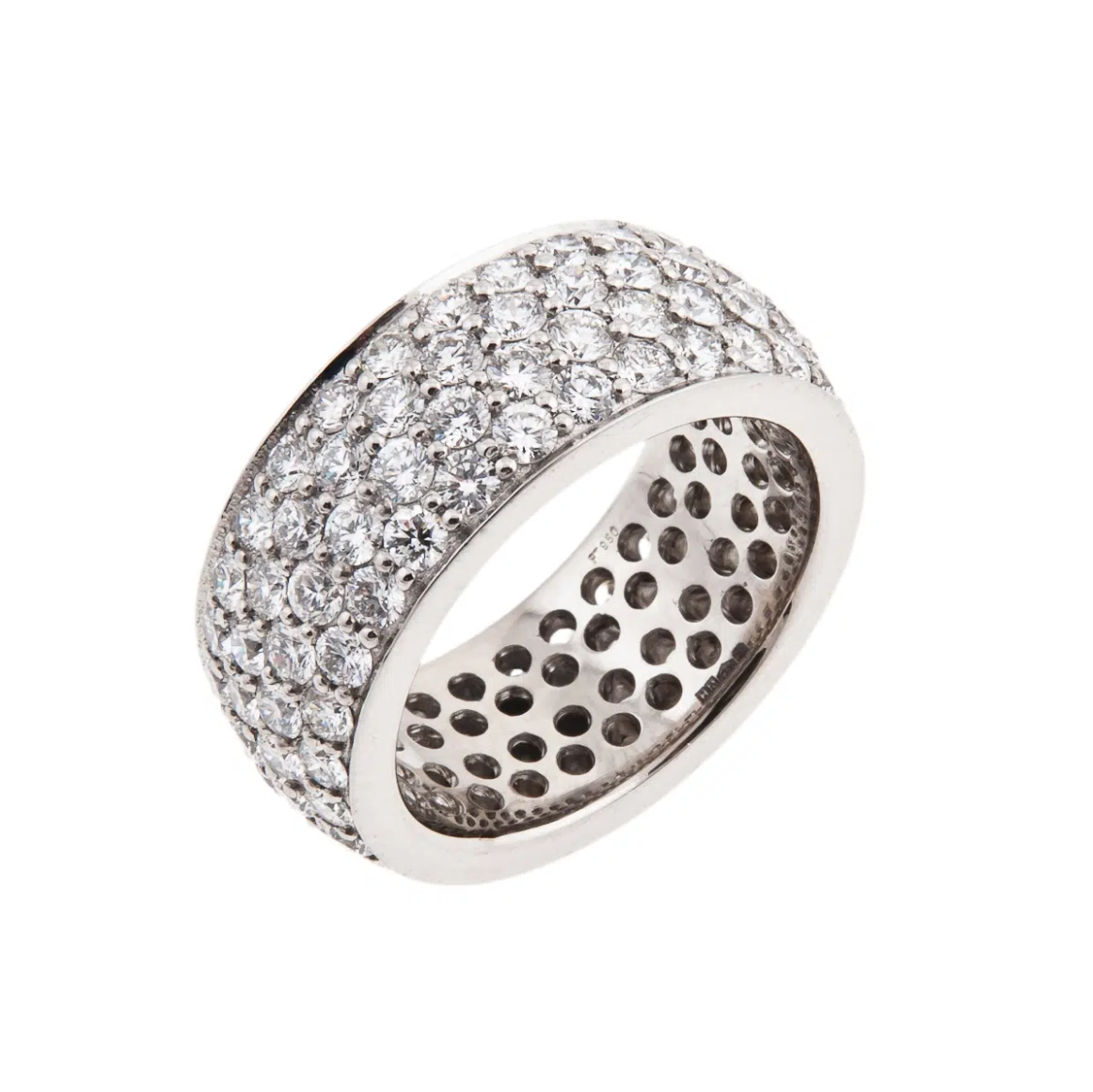
Pavé refers to the way small gemstones are set closely together across the surface of the metal.
Rather than being the same thing as a halo, pavé can actually be used within a halo, along the shoulders of an engagement ring, or across a diamond band.
The stones sit close together and are held by tiny beads of metal, leaving very little visible metal between them.
The effect is a surface that appears almost paved with diamonds, which is where the name comes from.
It is precise work. Every stone needs to sit correctly and evenly, particularly when pavé continues around a larger section of a ring.
For someone who loves sparkle beyond the centre stone, pavé set shoulders can completely change the character of an engagement ring.
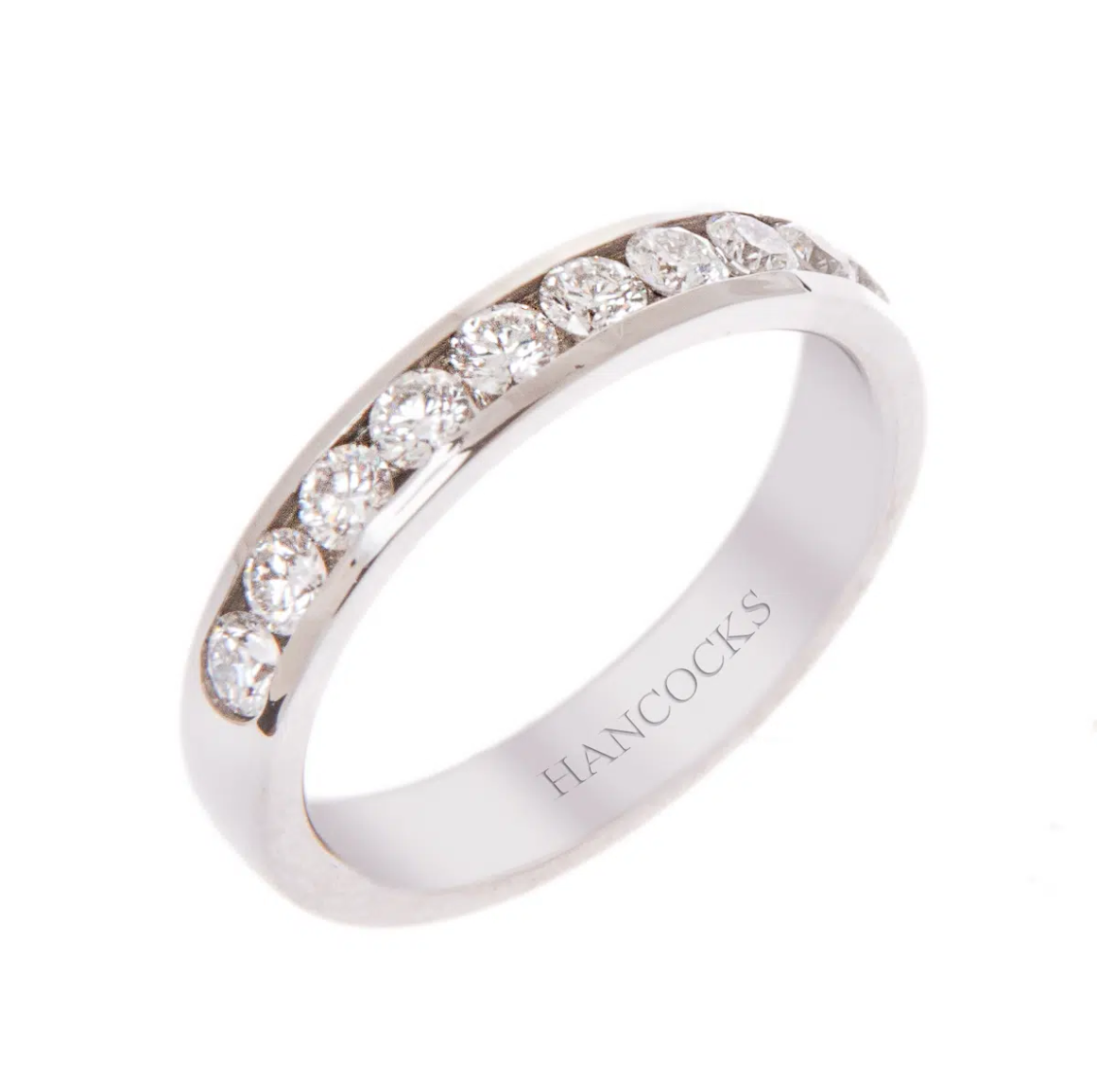
Channel settings are particularly common in eternity rings and diamond set wedding rings.
The gemstones sit closely together in a uniform row between two strips of metal. Unlike a claw setting, there are no individual claws separating each stone.
The result is a neat, defined line of gemstones with relatively smooth edges.
That makes channel settings worth considering if you like the idea of diamonds across a wedding or eternity ring but prefer a cleaner profile.
Once you know what you are looking for, you will start spotting them everywhere
You will often read that claw settings allow light to enter a diamond from the sides while a rub over setting blocks it, sometimes accompanied by rather precise sounding percentages.
We have yet to find a published measurement behind many of those figures.
In a well-cut brilliant diamond, light enters primarily through the top of the stone. It reaches the angled facets underneath and is reflected back towards the viewer.
The underside therefore works rather more like a mirror than a window.
The strongest practical argument for having an accessible back to the setting has less to do with letting light in and much more to do with cleaning.
Hand cream, soap and everyday dirt collect underneath a gemstone. Once a film begins to build up, it can absolutely affect how brightly that stone appears.
Whichever ring setting you choose, keeping it clean matters.
The best diamond or engagement ring setting is not necessarily the one somebody else recommends.
It depends on your hands, your lifestyle and how you intend to wear the ring.
Are you in and out of gloves all day, perhaps for work or simply because your hands are always cold? A rub over or lower profile claw setting could make life considerably easier.
Do you love seeing every possible angle of your diamond? You may prefer claws.
Want extra sparkle across the finger? Look towards pavé or a halo.
And if you work in physical labour, there is one piece of advice we would much rather you remembered than anything else in this article.
Leave your ring somewhere safe.
No setting makes a fine piece of jewellery indestructible, and we would much rather your ring missed a day at work than went missing altogether.
There is no useful one size fits all answer because security depends on the quality and condition of the setting as much as its design.
A full rub over setting does, however, offer excellent protection around the edge of a stone. There is continuous metal around the girdle and fewer raised points to catch on clothing or gloves.
Protection and warning are two different things, though.
A worn claw often gives you clues. It might snag a thread, feel rough or visibly begin to thin.
A rub over setting can keep its problems rather more to itself. From above it may still look perfectly sound even if wear is developing.
So while a rub over offers excellent protection, every ring still needs looking after.
If creating greater visual presence is important to you, a halo setting is worth considering.
The smaller diamonds surrounding the centre stone increase the overall area of sparkle, which can make the centre appear larger when viewed on the hand.
The shape of the centre stone also plays a part. Oval, marquise and pear shaped diamonds can give greater finger coverage than some other cuts of a similar carat weight.
That does not necessarily make one option better than another. Sometimes a beautifully proportioned solitaire is exactly the point.
Try both on.
You will know very quickly which camp you fall into.
Look at more than the ring from directly above.
Look at it from the side. See how high the stone sits. Run your finger gently across the setting. Think about what your hands actually do during an ordinary week.
Then try it on.
There is only so much a photograph can tell you about how an engagement ring, eternity ring or wedding ring will feel on your hand.
At Hancocks Jewellers, we have been helping people choose rings in Manchester since 1860, and you can find us at 29 King Street in Manchester city centre.
We will happily show you different ring settings side by side and explain what you are looking at. Sometimes seeing a claw setting next to a rub over tells you more in thirty seconds than another hour online ever could.
You can also browse our engagement rings diamond engagement rings, wedding rings and eternity rings online before you visit.
Then come in and see what feels right on your hand.