Free Shipping
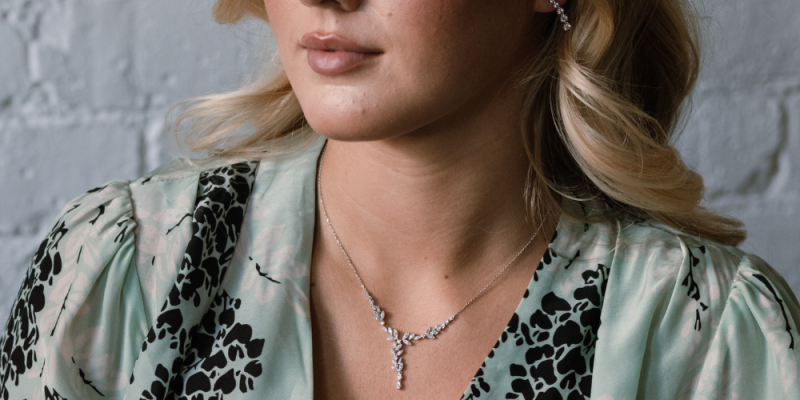
Choosing a diamond pendant can seem deceptively straightforward. The diamond may be the first thing to catch your attention, but once you begin comparing different designs, it becomes clear how much the setting, chain, metal and overall proportions influence the finished piece.
A single diamond on a fine chain has a very different presence from a cluster, just as 18ct yellow gold creates a different effect from platinum or white gold. Even a few centimetres in chain length can alter where the pendant sits and how it works with a neckline.
Carat weight will always form part of the decision, but it should never be the only consideration. A diamond pendant is worn close to the face, often more frequently than we realise, so the details surrounding the stone matter just as much as the stone itself.
Before deciding which one is right for you, it is worth knowing what to look for.
There is no ideal carat weight for a diamond pendant because scale is personal.
A smaller diamond on a fine chain can look beautifully precise, particularly if the intention is to wear it most days. A larger stone or broader arrangement has more visual impact and may become a stronger part of an outfit.
Body proportions matter too. The same pendant can sit quite differently from one person to another, which is why judging size from a product photograph alone can be difficult.
Shape also changes our perception of scale.
Round brilliant cut diamonds concentrate their sparkle into a compact shape, while pear and marquise cuts create more length. Clusters can spread diamonds across a wider area and create presence without relying on one larger centre stone.
The Brilliant Cut Diamond Cluster Pendant illustrates that particularly well. Rather than asking one stone to do all the work, several diamonds come together to create the design.
Look more closely at the Brilliant Cut Diamond Cluster Pendant

The setting determines much more than how the diamond is held.
A claw setting leaves more of the edge of the stone visible, which can give the pendant a lighter, more open appearance. A rubbed over setting surrounds the edge with metal and creates a smoother, more defined outline.
A halo introduces smaller diamonds around a central stone, while a cluster brings several stones together to form the overall design.
These differences are easy to overlook when comparing carat weights, yet they have a considerable effect once the pendant is worn.
Look at the piece from the side as well as from the front. The depth of the setting affects how closely it sits against the skin and whether the pendant feels delicate or more substantial.
A well-chosen setting should complement the stone rather than compete with it.
Metal changes the visual character of a diamond pendant.
Platinum and 18ct white gold provide a white background, creating a crisp transition between the setting and the diamond. Yellow gold introduces warmth and makes the metal more visible within the overall design.
Neither needs to be treated as the safer choice.
Instead, look at the jewellery you already wear. Someone who reaches for yellow gold earrings every morning may feel immediately more comfortable in the same metal around the neck. Equally, white metal can sit beautifully with diamonds if you prefer a cooler palette.
Pearls bring another dimension altogether.
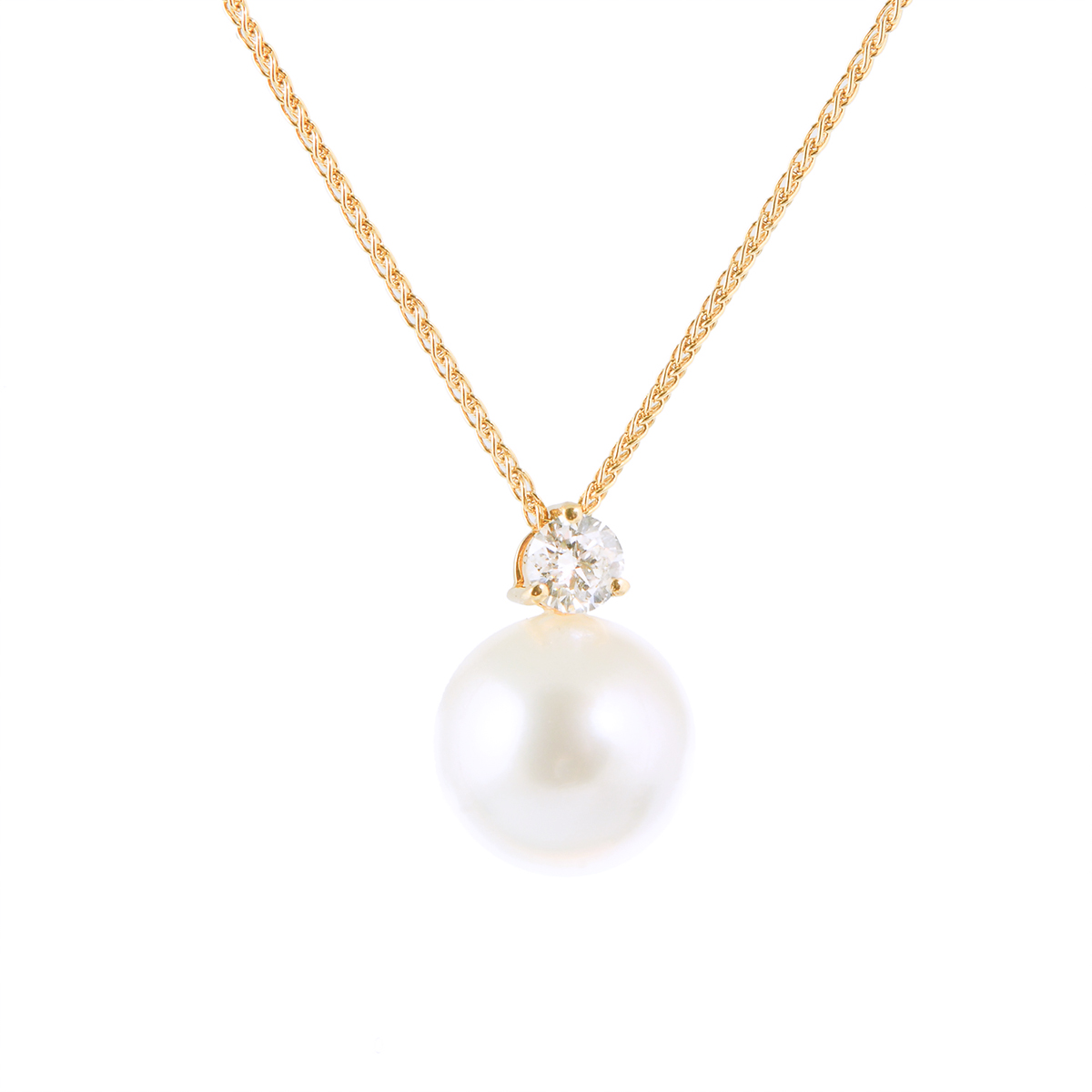
The Pearl and Brilliant Cut Diamond Pendant combines the reflective surface of a pearl with the sharper sparkle of a diamond. The two materials respond to light in completely different ways, which gives the piece more texture than an all-diamond design.
Yes, and for many people that is where the choice becomes more interesting.
Diamonds provide brightness, while a coloured gemstone introduces a clear focal point. Sapphire, ruby and emerald each create a completely different impression, even when the surrounding design is similar.
The White Gold Sapphire Circle Pendant and Chain uses sapphire to bring blue into a precise circular design. The white metal keeps the outline clean, while the colour gives the pendant its identity.
See the White Gold Sapphire Circle Pendant and Chain
Ruby has far more intensity.
In the Pear Cut Ruby and Diamond Cluster Pendant, the elongated pear shape draws the eye downwards, while the diamonds frame the colour rather than distracting from it.
It is the sort of pendant that can transform a simple neckline because the gemstone provides the point of interest.
Take a closer look at the Pear Cut Ruby and Diamond Cluster Pendant
Emerald creates another mood again.
The White Gold Emerald and Diamond Pendant brings green against white metal, giving the gemstone clear contrast and allowing the colour to stand out.
If you already wear plenty of black, navy, cream or neutral tailoring, a coloured pendant can introduce something more individual without asking the rest of the outfit to compete with it.
More important than it first appears.
The chain decides where a diamond pendant necklace sits, and that position affects both proportion and how the piece works with clothing.
A pendant worn closer to the collarbone becomes part of the neckline. One that falls lower has more space around it and can work particularly well over a simple top, dress or knit.
The connection between the pendant and chain matters too.
Some pendants hang from a bail and have more freedom to move. Others are connected more directly, which keeps the design in a more consistent position.
Movement changes how diamonds respond to light, while a steadier pendant creates a neater line.
The important thing is to notice the difference before you decide.
We would be cautious about dividing pendants too neatly into every day and occasion jewellery.
Some people are happiest wearing a substantial diamond every day. Others prefer a smaller pendant most of the time and choose something with more colour or scale when they are dressing for an evening.
The better question is how often you can imagine reaching for it.
Think about the necklines in your wardrobe. Consider the earrings you wear most and whether the pendant will sit comfortably with them. If you are choosing a gift, look at what the person already owns rather than trying to reinvent their style.
The most successful jewellery gifts often feel recognisably right for the person receiving them, while still offering something they would not necessarily have chosen for themselves.
Start by looking beyond the diamond.
Consider the scale of the whole piece, the position of the chain and the relationship between the setting and the stone. Decide whether you prefer a single point of light, a cluster, or the contrast of a coloured gemstone.
Then try it on.
A pendant is unusually dependent on proportion, and the mirror will tell you things that measurements cannot. One design may sit perfectly against the collarbone, while another suddenly works because of the length of its chain or the way the setting moves.
Hancocks Jewellers has been helping customers choose fine jewellery in Manchester since 1860, and our collection includes diamond pendants alongside sapphire, ruby, emerald and pearl designs in platinum and 18ct gold.
You can explore our pendant collection online, or visit us at 29 King Street in Manchester city centre and compare different styles in person.
A diamond may draw you to a pendant in the first place. The design around it is usually what makes you want to keep wearing it.